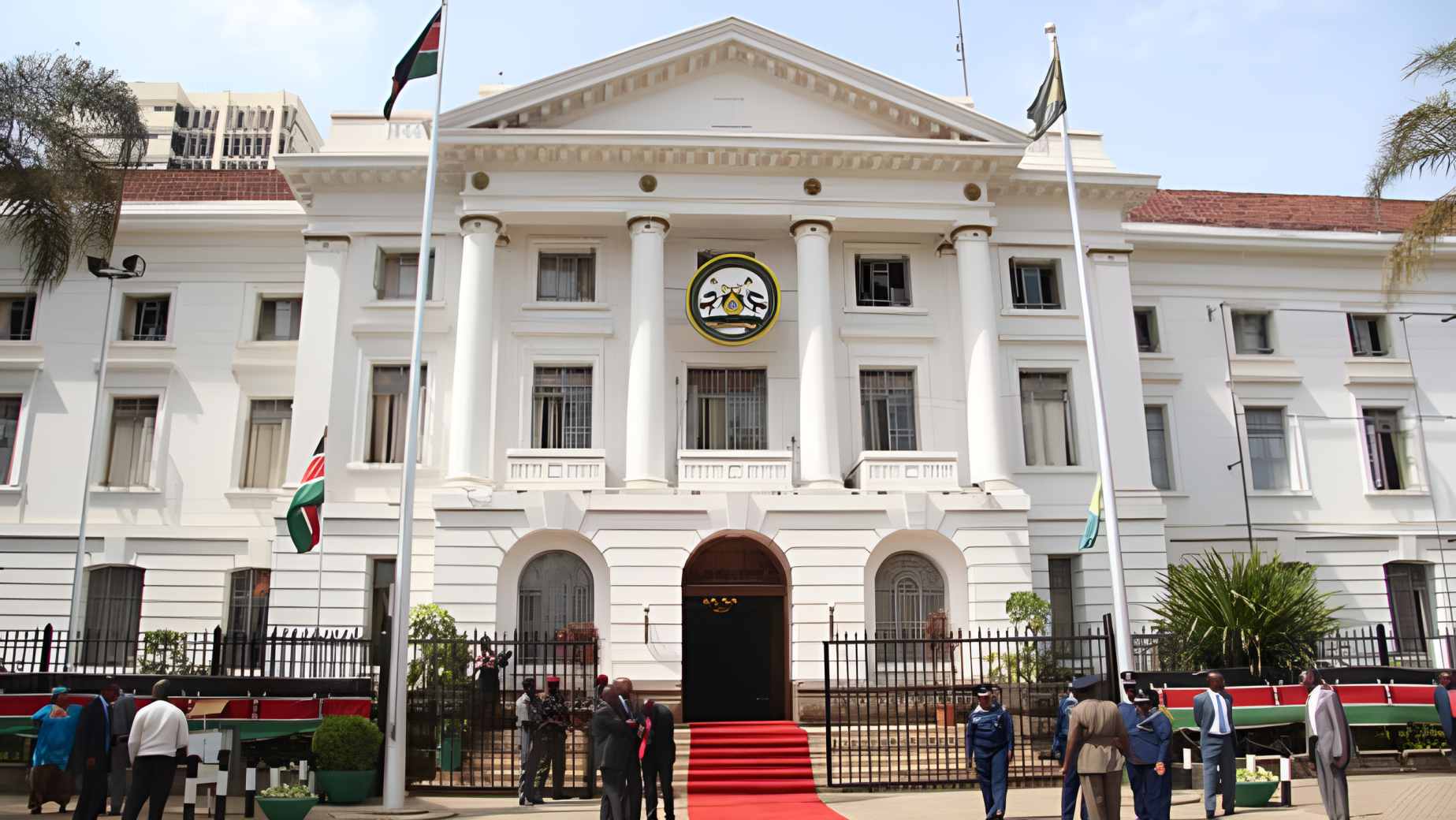
The Nairobi County Government has rejected claims that parking fees will rise from Sh300 to Sh520 next year, insisting that the current rates remain unchanged.
The confusion, officials said, stemmed from the recently launched Tariff and Pricing Policy 2025–2030, which provides a framework for assessing and justifying county service charges over the next five years, not a directive to impose higher fees.
Nairobi County Receiver of Revenue Tiras Njoroge said the policy is meant to guide the calculation of charges, while any fee change must first be approved through the annual Finance Act.
“Parking fees in Nairobi will remain unchanged, and any revisions would require approval through the Finance Act. The Tariff and Pricing Policy 2025–2030 only guides how service charges are calculated and does not introduce new fees,” he explained.
He added that adjustments to parking, market fees, business permits, or health charges must follow a formal process that includes public participation and considers economic conditions and public interest. “For any charge to be changed, it must go through the Finance Act process and reflect economic realities and the public good,” Njoroge said.
Responding to concerns about a possible hike, Njoroge emphasized that City Hall is mindful of Nairobi residents’ financial pressures. “The county is sensitive to the current economic environment and the needs of Nairobi residents. The governor is not planning to hike any service charge,” he said.
The revenue chief explained that the new policy was created to align fees with the real cost of service delivery, addressing long-standing public complaints over arbitrary pricing, revenue losses, and legal disputes.
“The policy forms the administrative and legal foundation Nairobi will use to review fees responsibly between 2025 and 2030, always guided by value for money for residents,” Njoroge said.
Earlier reports misinterpreted the Sh520 figure, which reflects the estimated cost of providing a single parking service, as a planned fee increase. The county clarified that only charges approved through the Finance Act are legally binding.
Njoroge noted that Nairobi is the first devolved unit to develop a tariff policy of this kind.
While reiterating that the Sh520 figure does not mean an automatic increase, he stressed again, “for any charge to be changed, it must go through the Finance Act making process and reflect the economic realities and public interest.”
The policy is designed to provide a fair, transparent, and lawful way of setting fees after years of complaints about arbitrary levies, leakages, and court challenges. “Governor Sakaja Johnson is not planning to hike any service charge. The county is sensitive to the current economic times and the needs of Nairobi residents,” Njoroge added.
He said the framework aims to standardize how the county sets prices, ensuring charges are based on research and predictable calculations rather than assumptions.































Comments
Sign in with Google to comment, reply, and like comments.
Continue with Google